Low-iron glass and clear glass
Why standard clear glass looks green at the edge, and where low-iron glass like Piana Ultra Clear makes a difference.
Look at the edge of a pane of ordinary clear glass and you see green. Low-iron glass takes most of that colour out. Here is where the green comes from, how the two compare, and when the difference is worth having.
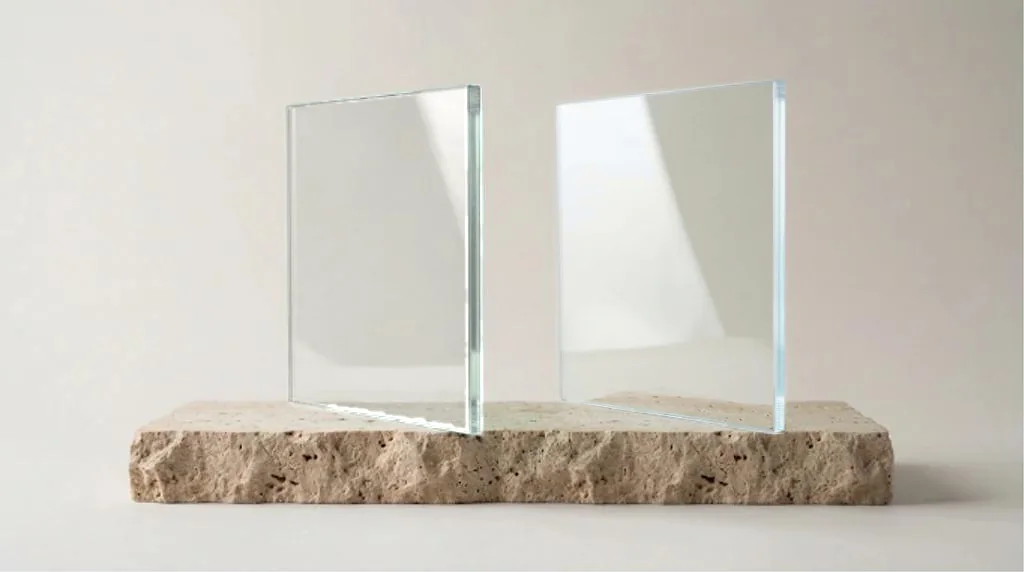
Why clear glass looks green
Standard clear glass is made from raw materials that carry a little iron oxide, about 0.1% of the glass. The iron absorbs some light and gives the glass a green tint. Face on, through a thin pane, you hardly see it. At the edge, or through thick glass, the green is easy to see, and it gets stronger as the glass gets thicker.
What low-iron glass is
Low-iron glass is made the same way, from raw materials with much less iron: about 0.01%, a tenth of standard glass. With so little iron the glass is close to colourless and lets more light through. It is also called ultra-clear or water-white glass. Piana Ultra Clear is our low-iron glass, and all our glass is available in it.
How much more light
| Glass | 3 mm (1/8″) thick | 19 mm (3/4″) thick |
|---|---|---|
| Standard clear glass | About 90% | About 83% |
| Low-iron glass | About 91% | About 90% |
The thicker the glass, the bigger the gap. Glass for railings, shower doors and partitions is 10 mm to 12 mm thick, which is where the difference starts to show.
Where you notice it
- Glass railings. Thick panels with their edges on show, and long runs where you look along the glass.
- White rooms. Shower glass against white tile, glass cabinet doors in a white kitchen, and partitions in white or pale rooms, where clear glass casts green.
- Display. Wine walls and display cabinets, where you want true colour behind the glass.
Tinted and mirror glass have colour of their own, so the difference shows mostly in clear glass.
Strength and safety
Low-iron glass is tempered and laminated the same way as clear glass, so it meets the same safety glass rules for railings, doors and showers. The difference is how it looks, not how strong it is.
See it for yourself
Put the two side by side and look at the edges: clear glass shows green, and low-iron glass stays close to colourless. Ask us to quote both on your project, so you can compare.
Sources
- Low-iron glass, Vitro Architectural Glass
- Daylighting with low-iron glass, Vitro Architectural Glass
- Low-iron glass, Guardian Glass
Have us come measure, free.
We measure at your home or site at no charge, then send a written quote.